Friend CRMPrivate relationship desk
Remember the people who matter.
Keep context, promises, boundaries, and next moves in one private desk. No contact imports. No message scraping. No weirdness.
Available on the U.S. App Store since August 5, 2026. The public web demo uses fictional sample data only.
Official Friend CRM field office

Status: socially operational.
No surveillance conducted today.
Not sales software
Relationship memory, without turning your life into a pipeline.
Friend CRM gives one person a clear place to remember what matters: people, conversations, promises, boundaries, and the small things worth following through on.
It has a fake-serious bureau personality. The privacy controls are serious.
The desk, in full
One private desk. Four useful rooms.
Desktop gives the product its full shape. iPhone keeps the important context close when you are out in the world.
Department 01
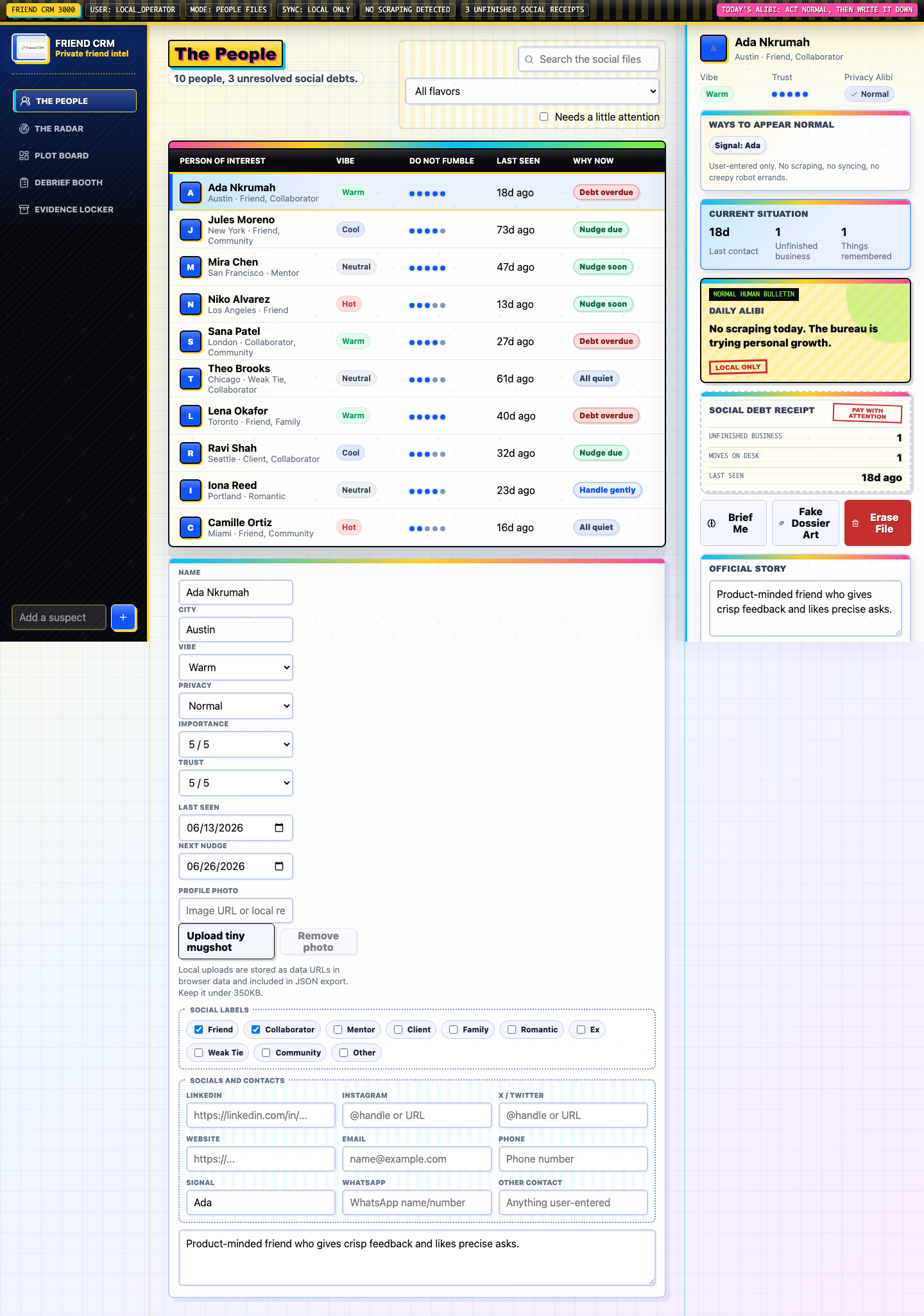
The People Desk
See who is in your world, what is unresolved, and what needs a little attention.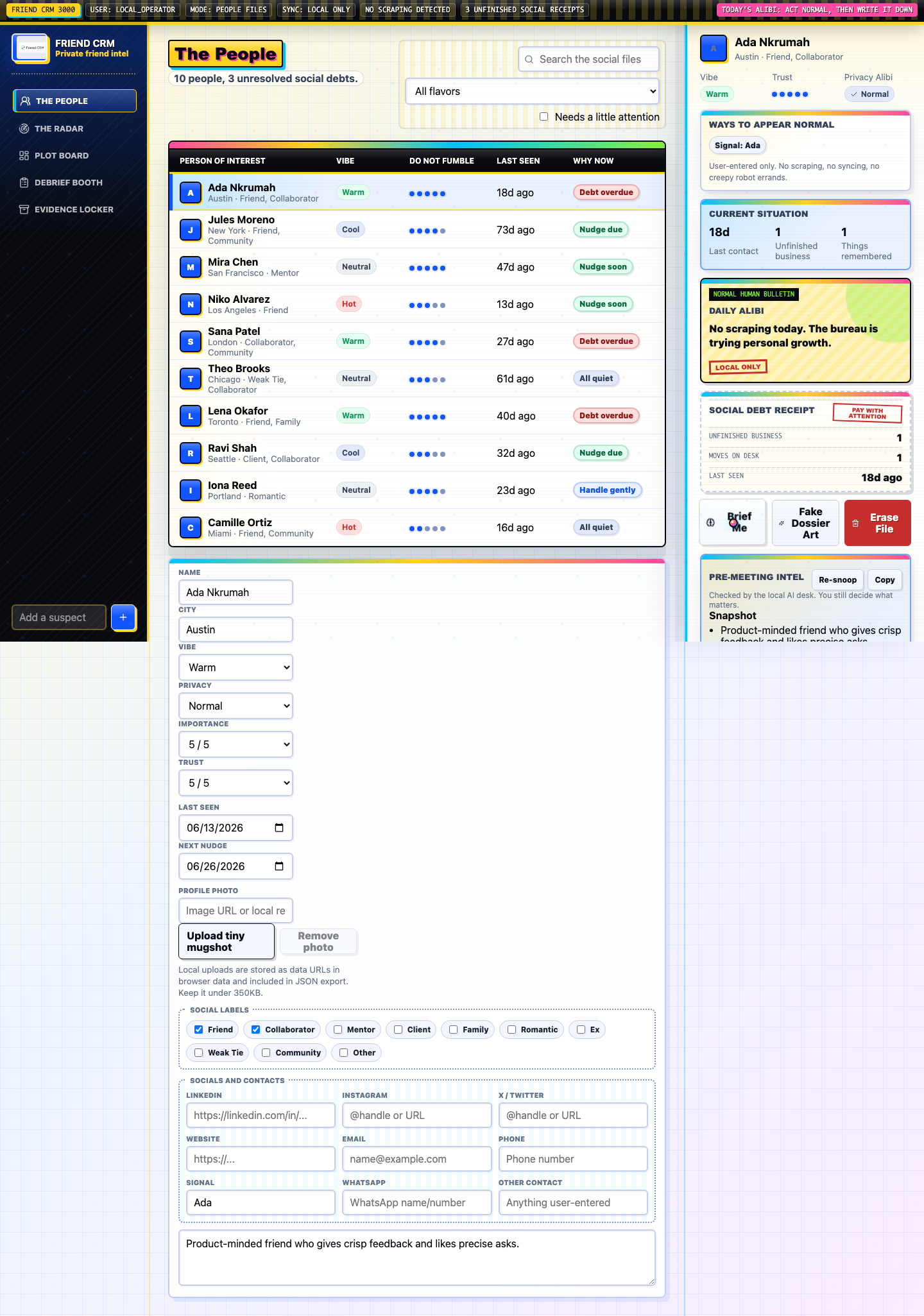
Department 02
The Briefing Room
Review the context before you follow up. The app drafts. You decide.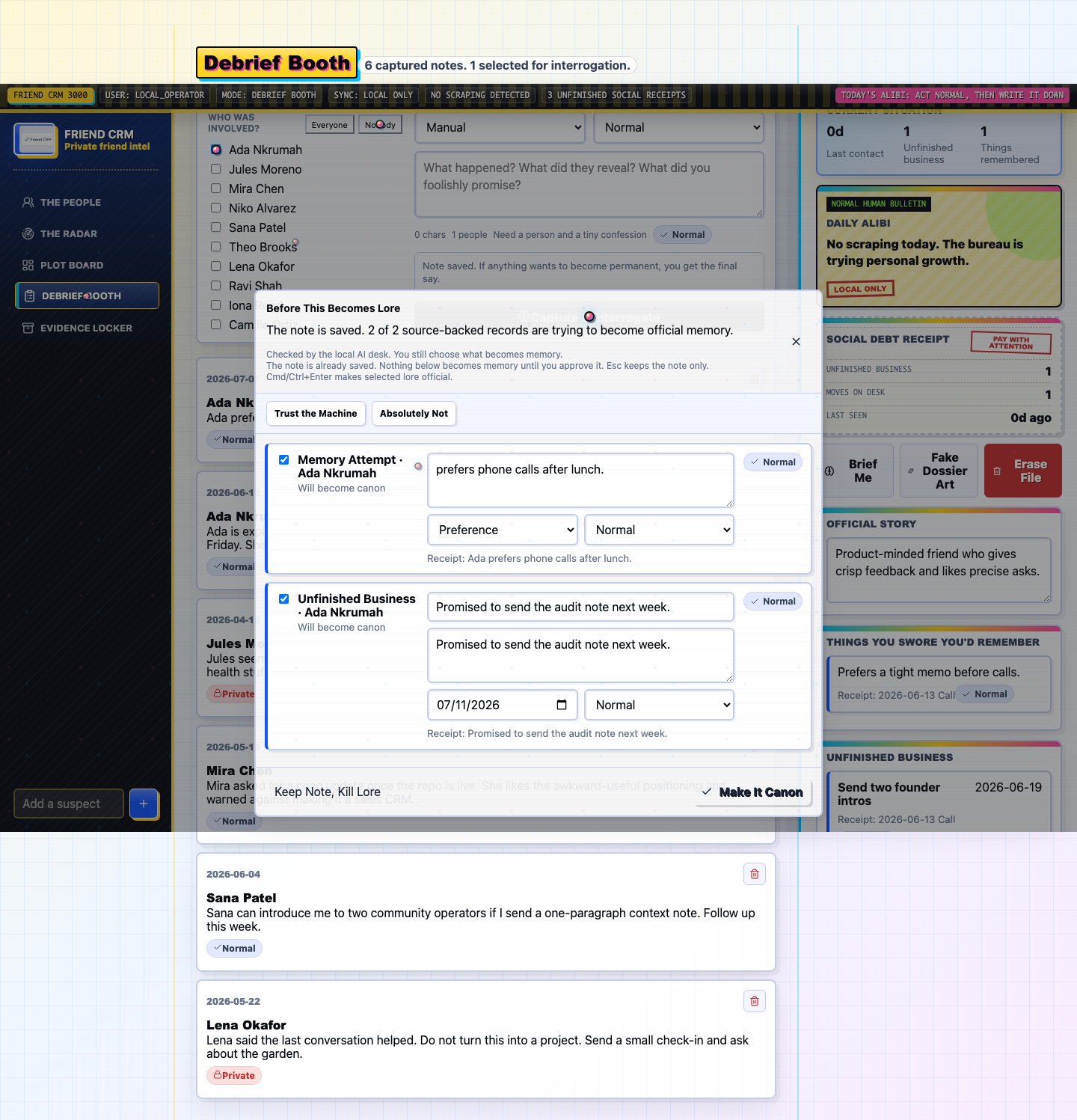
Department 03
The Debrief Booth
Nothing becomes durable relationship memory without your explicit approval.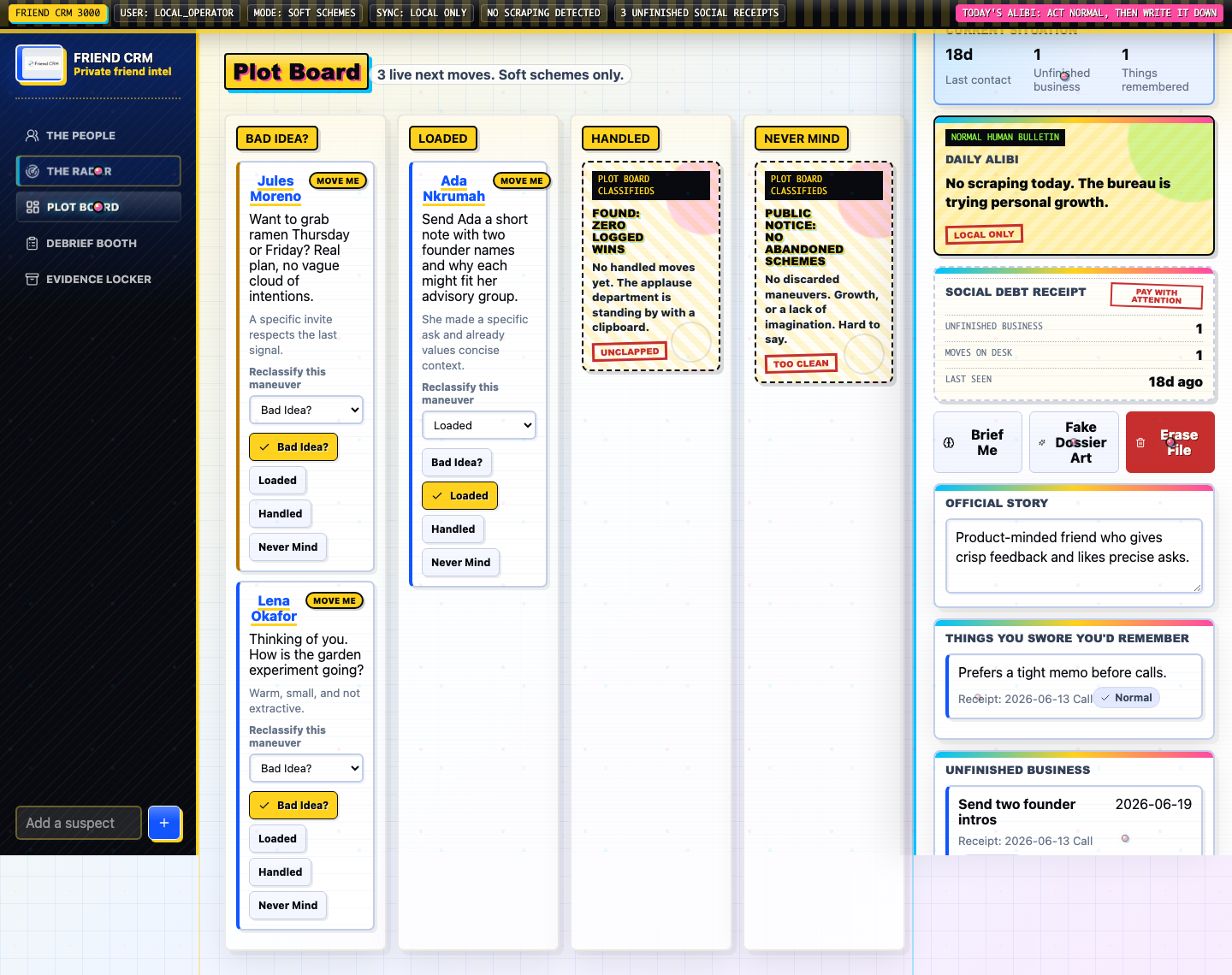
Department 04
The Plot Board
Keep intentions visible without outsourcing the actual human part.On iPhone
A real field desk, not a desktop app squeezed into a phone.
The person dossier opens as a focused drawer, so you can review context and choose a next move without losing the room you were working in.
Request Friend CRM iPhone beta accessiOS app
Now available on the U.S. App Store.
Friend CRM is a focused iPhone desk for people, debriefs, and follow-through. It stays local to the device, uses fictional data in these captures, and never reads your contacts or messages.
Release statusAvailable on the U.S. App Store · August 5, 2026View listing ↗


Official bureau policy
The jokes are fake. The boundaries are not.
Ready for inspection
Open the demo. Keep the people part human.
The web demo is a fully playable, local-first experience with fictional sample data. The iPhone beta brings the same private-desk mindset to your phone.