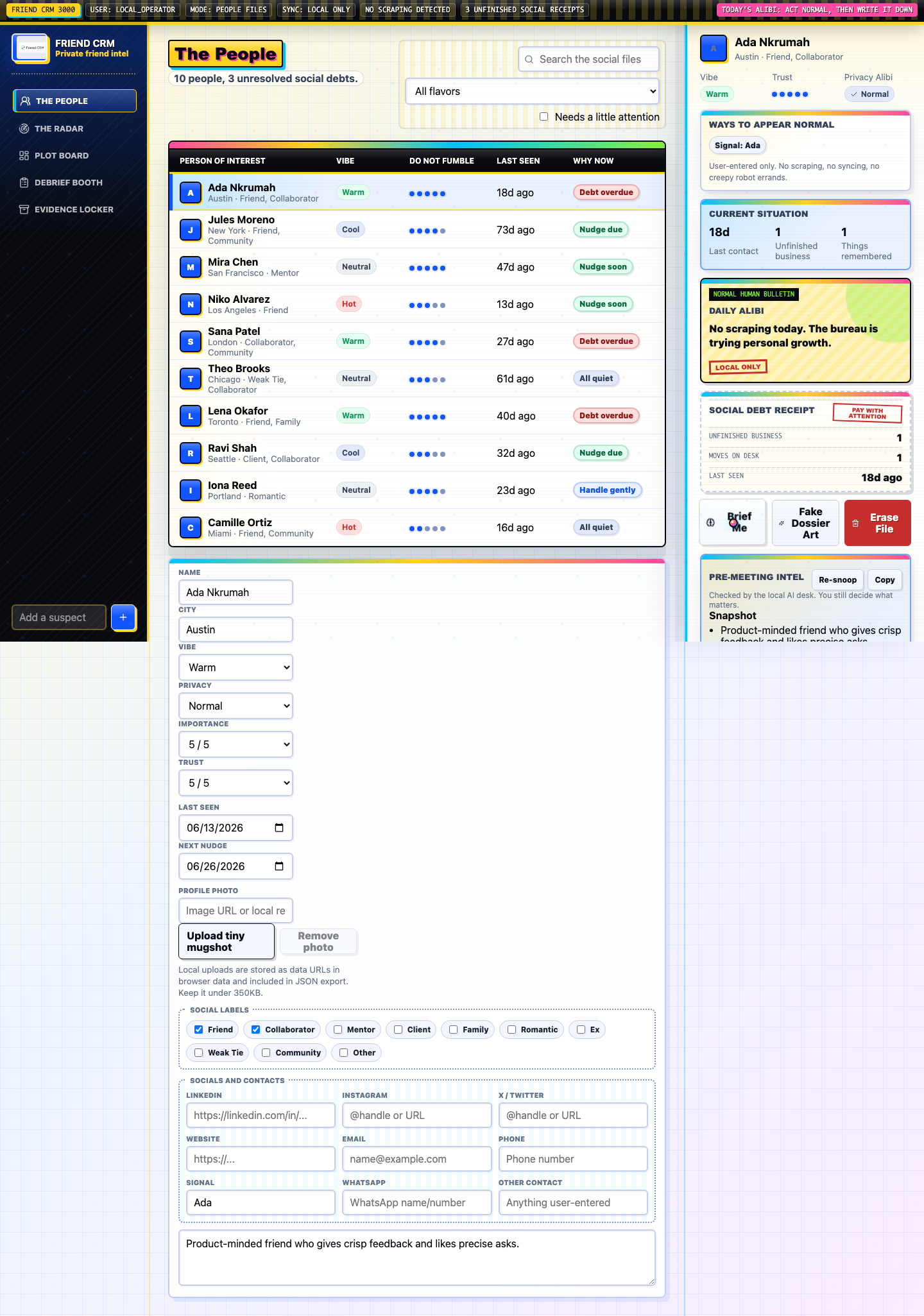
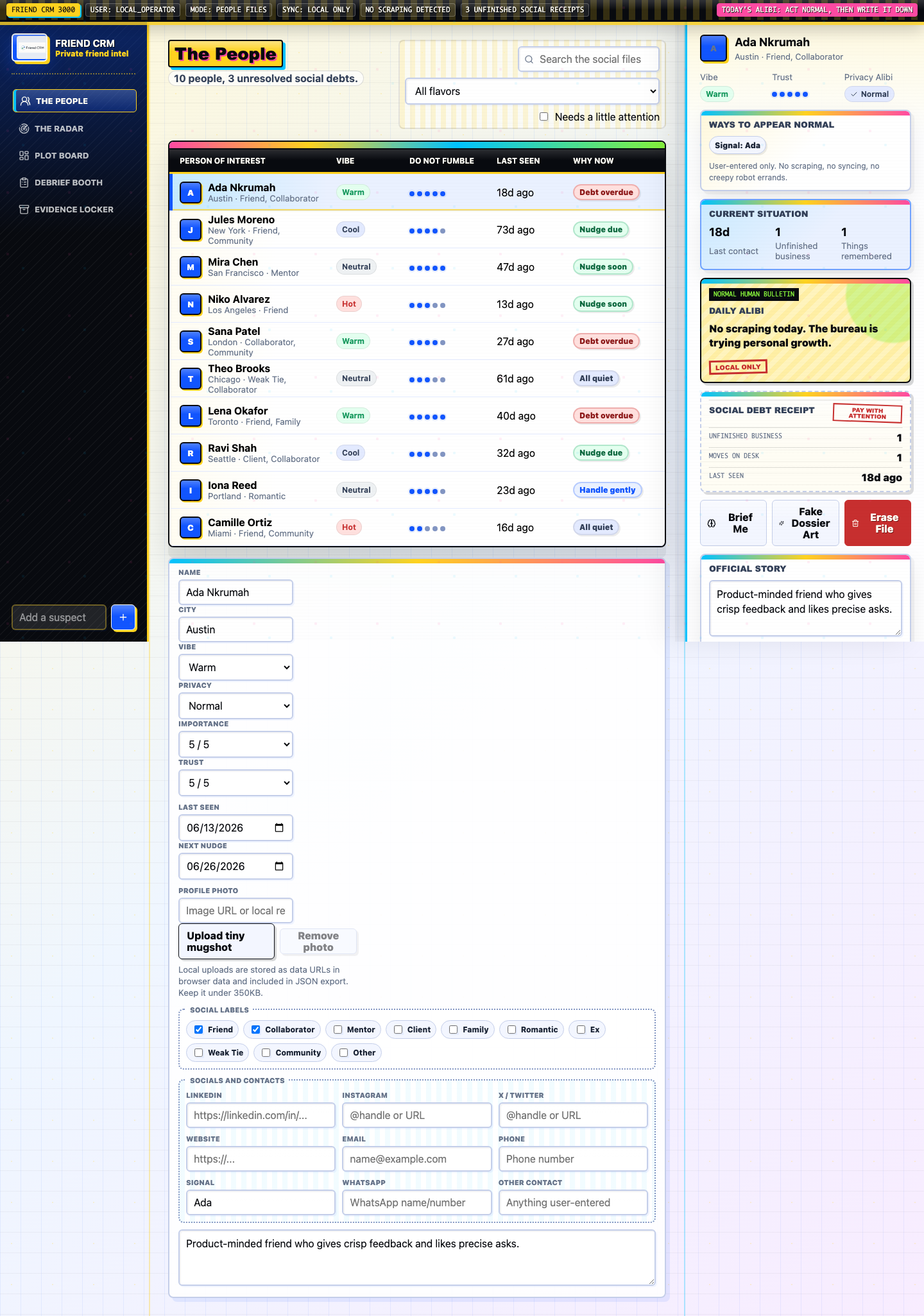
Working desk
Context stays visible without pretending to know a person.
The fictional People Desk gives a user a place to hold their own notes, sources, and chosen next moves while keeping the no-scraping boundary visible.
Human-led relationship system / case study 04
Fictional-data demo and release track
Relationship context is easy to lose between conversations, but conventional CRM behavior can reduce people to records to be monitored. Friend CRM takes a deliberately different stance.
The operating reality
What exists now
A relationship-memory workspace preserves intentional context, sources, and possible next moves while keeping human judgment in charge of every interaction.
Selected evidence
Fictional records demonstrate the interaction without turning private relationship history into portfolio material.
Working desk
The fictional People Desk gives a user a place to hold their own notes, sources, and chosen next moves while keeping the no-scraping boundary visible.

Phone evidence
A narrow dossier view preserves the source and next-move context on a phone without converting the relationship into a score or automated action.
Working artifacts
The product supports the user’s own judgment and does not automate a relationship.
A visible working surface for relationship context, sources, and deliberate follow-up.
A phone-first view keeps the source and next move close without manufacturing a social score.
Public proof demonstrates the interface and behavior without exposing personal relationship history.
Public proof
Boundary
All public records are fictional. The product does not present private relationship data, automated friendship, or surveillance as a portfolio asset.
Relevant next step
Start with the human decision the software should support, and the authority it should never take.